Showing posts with label Nandan Nilekani. Show all posts

Wednesday, August 15, 2007

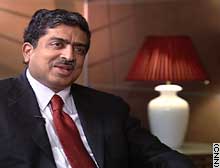
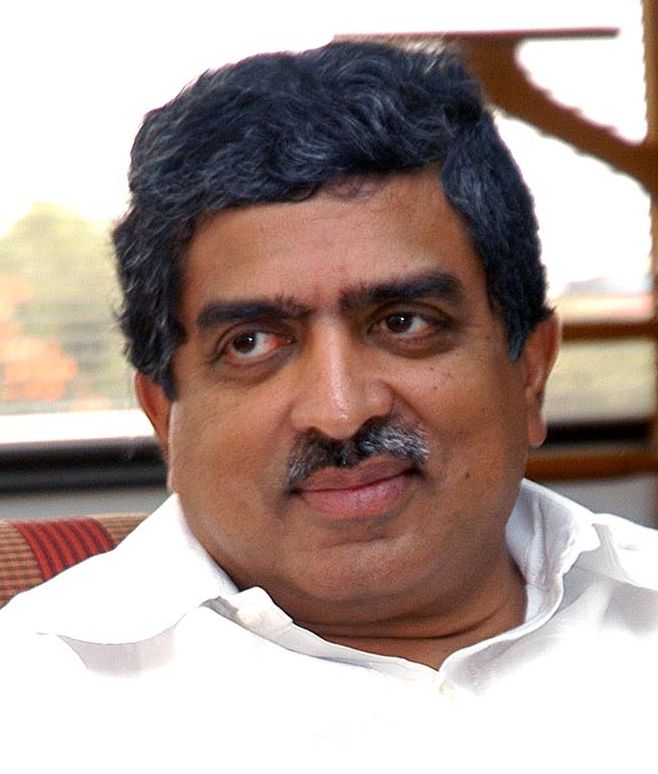
Nandan Nilekani to write a book

Infosys Technologies co-chairman Nandan Nilekani is working on a book "on weekends". The book, to be published by Penguin, will be out next year.

This, according to those who know him well, will pave the way for him to emerge as a "thought leader", both within and without Infosys.

Last month, Nilekani, 52, handed over the role of CEO and managing director to co-founder Kris Gopalakrishnan and announced a morphed role for himself within the firm, focusing on strategy and global customer contact. He will also be actively pursuing the public agenda that he has had for a long time.

The book means he has something to say. The public agenda indicates that this is likely to go well beyond issues that affect the information technology industry. Sridhar Mitta, industry veteran and currently head of e4e, rationalises the change: "You make money, achieve fame and then like to use it to some purpose. At that stage you slowly ease yourself out."

Avinash Vashistha, offshoring consultant and currently head of Tholons, who has known Nilekani for years, explains, "Chief executives, after they have made their pile in the west often become entrepreneurial investors like Lou Gerstner who joined Carlyle after quitting IBM. But, I cannot see Nilekani in such a role and, in any case, there are no private equity firms of such stature in India."

Not everybody sees Nilekani getting into an exit mode. Ashok Soota, head of MindTree [Get Quote] and another industry veteran, sees a carefully thought out strategy operating in Infosys. "The change of role is a smart move. This is not just my view but (Azim) Premji's too. He said this created discretionary time to focus on key areas like strategy and large customers. So, he is out there in front without having to spend time with CEO type work. The firm has not one but two CEOs who can multiplex. Kris (the new CEO) is also well chosen. If you take into account Narayana Murthy, who is always available, there are in fact three CEOs."

Soota debunks the theory that Infosys works as if it is on auto pilot. "It may look like that but there are always domain and people challenges.

Plus, there are these new challenges like rupee appreciation and global uncertainties. So there is lots to do in a hands-on kind of way.

While affirming his continuing role in Infosys, Nilekani readily lists his public agenda. "I have been at the forefront of the Brand India building activity. This is the third year I am chairing the CII Brand India committee. Now, are planning an event in New York called 'India at 60' in September."

It all began with what he did for the 'India Everywhere' promotion at Davos two years ago. This was followed up with a stepped up presence at the World Economic Forum in various events and activities, and again at Davos this year.

"We are promoting Brand India for a variety of reasons, to raise India's profile, showcase India's economic opportunities, showcase its democracy, demographics and diversity which make it unique, project our soft power, so to speak," he adds.

Nilekani's second area of public interest is urbanisation. "I have been involved with urbanisation ever since I was heading the Bangalore Agenda Task Force here (Bangalore). Then I have been involved with the Jawaharlal Nehru National Urban Renewal Mission and I am also on the prime minister's review committee for it."

Third, he is a member of the national knowledge commission under Sam Pitroda, which has been working on a variety of knowledge issues, policies for education, e-governance and access.

A peep into Nilekani's long-term agenda is available from V Ravichandar, who heads Feedback Consulting and is a long term friend and associate in the public affairs area. He recalls that despite being part of a fast growing organisation, Nilekani has found time for public issues and community initiatives.

Ravichandar says Nilekani is also a strategic thinker who can get an agenda together that recognises practical realities. "These skills of his have sharpened over the years. He is headed to become a thought leader, in India and globally."

Original Story

Technology has brought us greater freedom - Nandan Nilekani

Do you think technology (in an Indian context) has brought us greater freedom?

Yes, it has helped level the playing field for India in the global arena. In a way, it has transformed India by providing a new vision to the country and liberating its populace. I believe rural India’s need for knowledge empowerment can be addressed using technology. The telecom revolution has really ensured that people in every part of India are able to connect with each other and with the external world. Now, we have leapfrogged to the next stage where mobile phones and the Internet are revolutionising the Indian consumer and corporations.

Also, what technology has done for the Indian corporation is remarkable. Competing in the industry is no longer limited to a privileged few. Technology has brought forward a whole new set of entrepreneurs who are ensuring that India gets her right place in the world. From an employment perspective, it has raised the standard of living of the average middle-class Indian. The IT& ITES industry has enabled the middle-class Indian to go after bigger dreams. It has also indirectly created many more job opportunities.

Do you believe companies today can access and develop technology more easily than before?

Yes, the liberalisation process definitely made technology ubiquitous. The Indian IT-ITES sector (including the domestic and exports segments) is expected to exceed $47.8 billion in annual revenue in FY07, an increase of nearly 28% in the current fiscal.

Additionally, with the growth in Indian economy and favourable policies, leading MNCs are looking to India as an attractive market for their products and technologies, and are targeting the Indian consumer.

We have taken the lead in developing technology cheaper, faster and better. Therefore, it is an area that provides us with lots of opportunities.

Why do you think Indian companies still do not invest significantly in developing or acquiring technology?

I believe we are progressing on this front. Indian companies do not invest significantly because their propensity for risk is not high. Developing technology requires up front capital investments and a nurturing period before you can realise huge profits. The gestation period is longer. However, the growth is non-linear in the sense that once the technology succeeds , your margins are much higher.

Today’s customer is increasingly demanding and therefore the companies need innovative concepts to address the diverse requirements of a large customer base. We have seen
increased access to capital for developing technology in India through venture capitalists. We hope to see more and more Indian companies adopting technology to compete in the flat world.

If you had to pick one technology (say mobile phones or the Internet) then which one, in your mind, has brought Indians more freedom?

Both have an important role to play in empowering the average Indian.

The Internet has opened the world to India and brought in greater awareness and the accompanying benefits of globalisation . Today, India has over 70 million
Internet users, of which nearly 2 million have broadband connections. With Indians buying over a million computers every year and computer education now an essential part of primary and secondary school curricula, young Indians are becoming intimately familiar with the medium and the associated technologies.The growth of the Internet has opened up new businesses like online travel booking and e-banking . The Internet is also actively fuelling the government’s e-governance initiatives such as online filing of tax returns.

The telecom boom we are experiencing in India today is opening up new opportunities for Indians. About 5 million new telephone connections are added in India every month. With over 130 million users, mobile phones are bridging the communication divide between urban and rural India by connecting people across the country.

Original Story

Sunday, August 12, 2007

Nandan Nilekani in Indo-Japan business leaders forum

NEW DELHI: India may nominate 14 CEOs for India Japan Business Leaders Forum (BLF) which will have its first interaction during Japanese Prime Minister Shinzo Abe’s visit to India beginning August 21.

The Prime Minister’s Office (PMO) has cleared 10 names including Infosys Technologies co-chairman Nandan M Nilekani, Hero Cycles managing director & CEO of Sunil Kant Munjal, Bharat Forge chairman and MD Baba Kalyani and HDFC chairman Deepak Parekh, sources told SundayET.

The other names include Toyota Kirloskar Motor vice-chairman Vikram Kirloskar, Moser Baer MD Deepak Puri, Pharma major Wockhardt chairman HF Khorakiwala and Sanyo-BPL chairman and CEO Ajit G Nambiar. Mr Nilekani is likely to chair the forum from the Indian side whereas Canon CEO and president Fujio Mitarai could be his counterpart from Japan.

Sources have said that PMO is considering four more names including Reliance Industries chairman Mukesh Ambani, Bharti Group chairman Sunil Bharti Mittal and IL&FS chairman Ravi Parthasarathy.

Japan has submitted the names of 14 business leaders to India. The BLF, which will be formed in the same way as the US India CEO Forum, will facilitate trade and investment opportunities between Japan and India. Tata Group chairman Ratan Tata and JP Morgan Chase chairman & CEO William B Harrison are co-chairs of the US India CEO Forum.

Significantly, business interactions between India and Japan are likely to increase manifold after Japan has agreed to partner $90-billion Delhi-Mumbai Industrial Corridor. PM Abe will be accompanied by a 160-member jumbo business delegation.

Original Story

Sunday, August 05, 2007

IT jobs will double to 3.2 m in four years - Nandan Nilekani

Employment generation by IT and ITES sectors will double to 3.2 million within the next four to five years, feels Mr Nandan M. Nilekani, Co-Chairman, Infosys Technologies Ltd.

Delivering the 12th Prof. Y. Nayudamma Memorial Lecture, on ‘Information Technology for Development’, at the R.M.K. Engineering College, Kavaraipettai, on Wednesday, Mr Nilekani observed that it took the industry 30 years to reach the present level of employment of 1.6 million. “What has happened in the last 30 years, will now happen in the next four to five years,” he said.

Mr Nilekani also received Nayudamma Award for the Year 2007 from Dr Anil Kakodkar, Chairman, Atomic Energy Commission and Secretary, Department of Atomic Energy, Government of India.

He said that IT worked well when it came to projects of one entity on a national scale, such as railway reservation or the National Stock Exchange. However, when it came to integrating applications at multiple regions, “it is a different ballgame”.

“Every city and every State is determining its own applications. A large number of projects, but we are not really able to replicate and scale them up across the country. And therefore clearly the challenge is how do we take elsewhere projects that are run in one State or one city and replicate,” Mr Nilekani said. He also stressed the need for introducing a national identification number for all citizens and presented it to the audience as a major project involving the IT industry.

“Unlike in the US, where everybody has a social security number, we do not have one number to identify our citizens,” he said.

In India, there are different numbers to identify a citizen — such as passport number, PAN number, TIN and ration card BPL number.

“So, one of the big challenges of the next decade is how to create a national way of systematically assigning an identification number to everyone. Because once you do that, you can do that for many things. Today, thousands of crores of subsidies are being given to the poor, but they are not reaching the poor people, because there is no way to directly reach benefits to the poor. The national identification number will actually enable the govt to directly target benefits to the poor

Original Story

Thursday, July 26, 2007

Indian BPOs are reliable: Nilekani

Source: Hindu


(From left) Kuldeep Kumar, Professor, City University, Hong Kong; S. Krishna, Professor, Indian Institute of Management, Bangalore; Mary Ann Van Glinov, Professor, Florida International University; Nandan M. Nilekani, co-Chairman, Infosys Technologies and Deependra Moitra, management consultant, at the second international conference on globally distributed work, in Bangalore on Wednesday.

BANGALORE: Outsourcing in India is built on the foundation of commitment and reliability, and its track record is responsible for the stupendous growth of the sector, Nandan Nilekani, co-chairman, Infosys Technologies, has said.

Her was delivering the keynote address at the Second International Conference on Globally Distributed Work, organised by the Indian Institute of Management, Bangalore, here on Wednesday. Demographic changes are hugely important, he said, while highlighting the importance of the fact that the population in India is much younger, which would further power our country, especially when compared to countries in the European Union and Japan, which have ageing populations.

He also spoke of a virtual working environment and highlighted the significance of technology in communication while identifying it as an area with extreme growth potential, enough to transform the world and its economics.

The question and answer round saw a student from Annamalai University asking about the rise of the rupee and the future of the IT industry in the global market. Mr. Nilekani replied that the cost would definitely dictate the destination for future business ventures. But “that was not what I said!,” he said in reply to the student’s further query on whether this would mean a decline for the IT industry.

Infosys looking at acquisitions in all geographies: CEO


Ramnath Shenoy
Bangalore, Jul 25 (PTI) IT major Infosys Technologies Ltd is scouting for acquisitions in "all geographies" to expand its overseas footprint, the company's Chief Executive Officer and Managing Director S Gopalakrishnan said.

Gopalakrishnan said it has started investing in Japan, China, Europe, Australia and the US in order to fill gaps in their services offerings.

"We look at acquisitions to fill gaps in our services as well as accelerate our growth in certain geographies where we have less presence today", Gopalakrishnan told PTI here.

"And if you are looking at where we are investing today...Japan, China, Europe, Australia and even in the US to fill the gaps in our services. In that sense, we are looking at all geographies (for acquisitions)", he said.

"There is always something being evaluated (potential acquisitions)", Gopalakrishnan said.

The NASDAQ-listed firm had cash and cash equivalents of USD 1.6 billion (Rs 6,442 crore) as on June 30 this year.

Speaking on his role as CEO, Gopalakrishnan said stepping into the shoes of N R Narayana Murthy and Nandan M Nilekani who held the post earlier is challenging as the company has been successful under their leadership, and (now) there is a lot of expectation about where it is going.

The company today is operating in an environment which is changing, he said. PTI

Saturday, July 21, 2007

Life lessons from Narayana Murthy


N R Narayana Murthy, chief mentor and chairman of the board, Infosys Technologies, delivered a pre-commencement lecture at the New York University (Stern School of Business) on May 9. It is a scintillating speech, Murthy speaks about the lessons he learnt from his life and career. We present it for our readers:

Dean Cooley, faculty, staff, distinguished guests, and, most importantly, the graduating class of 2007, it is a great privilege to speak at your commencement ceremonies.

I thank Dean Cooley and Prof Marti Subrahmanyam for their kind invitation. I am exhilarated to be part of such a joyous occasion. Congratulations to you, the class of 2007, on completing an important milestone in your life journey.

After some thought, I have decided to share with you some of my life lessons. I learned these lessons in the context of my early career struggles, a life lived under the influence of sometimes unplanned events which were the crucibles that tempered my character and reshaped my future.

I would like first to share some of these key life events with you, in the hope that these may help you understand my struggles and how chance events and unplanned encounters with influential persons shaped my life and career.

Later, I will share the deeper life lessons that I have learned. My sincere hope is that this sharing will help you see your own trials and tribulations for the hidden blessings they can be.

The first event occurred when I was a graduate student in Control Theory at IIT, Kanpur, in India. At breakfast on a bright Sunday morning in 1968, I had a chance encounter with a famous computer scientist on sabbatical from a well-known US university.

He was discussing exciting new developments in the field of computer science with a large group of students and how such developments would alter our future. He was articulate, passionate and quite convincing. I was hooked. I went straight from breakfast to the library, read four or five papers he had suggested, and left the library determined to study computer science.

Friends, when I look back today at that pivotal meeting, I marvel at how one role model can alter for the better the future of a young student. This experience taught me that valuable advice can sometimes come from an unexpected source, and chance events can sometimes open new doors.

The next event that left an indelible mark on me occurred in 1974. The location: Nis, a border town between former Yugoslavia, now Serbia, and Bulgaria. I was hitchhiking from Paris back to Mysore, India, my home town.

By the time a kind driver dropped me at Nis railway station at 9 p.m. on a Saturday night, the restaurant was closed. So was the bank the next morning, and I could not eat because I had no local money. I slept on the railway platform until 8.30 pm in the night when the Sofia Express pulled in.

The only passengers in my compartment were a girl and a boy. I struck a conversation in French with the young girl. She talked about the travails of living in an iron curtain country, until we were roughly interrupted by some policemen who, I later gathered, were summoned by the young man who thought we were criticising the communist government of Bulgaria.

The girl was led away; my backpack and sleeping bag were confiscated. I was dragged along the platform into a small 8x8 foot room with a cold stone floor and a hole in one corner by way of toilet facilities. I was held in that bitterly cold room without food or water for over 72 hours.

I had lost all hope of ever seeing the outside world again, when the door opened. I was again dragged out unceremoniously, locked up in the guard's compartment on a departing freight train and told that I would be released 20 hours later upon reaching Istanbul. The guard's final words still ring in my ears -- "You are from a friendly country called India and that is why we are letting you go!"

The journey to Istanbul was lonely, and I was starving. This long, lonely, cold journey forced me to deeply rethink my convictions about Communism. Early on a dark Thursday morning, after being hungry for 108 hours, I was purged of any last vestiges of affinity for the Left.

I concluded that entrepreneurship, resulting in large-scale job creation, was the only viable mechanism for eradicating poverty in societies.

Deep in my heart, I always thank the Bulgarian guards for transforming me from a confused Leftist into a determined, compassionate capitalist! Inevitably, this sequence of events led to the eventual founding of Infosys in 1981.

While these first two events were rather fortuitous, the next two, both concerning the Infosys journey, were more planned and profoundly influenced my career trajectory.

On a chilly Saturday morning in winter 1990, five of the seven founders of Infosys met in our small office in a leafy Bangalore suburb. The decision at hand was the possible sale of Infosys for the enticing sum of $1 million. After nine years of toil in the then business-unfriendly India, we were quite happy at the prospect of seeing at least some money.

I let my younger colleagues talk about their future plans. Discussions about the travails of our journey thus far and our future challenges went on for about four hours. I had not yet spoken a word.

Finally, it was my turn. I spoke about our journey from a small Mumbai apartment in 1981 that had been beset with many challenges, but also of how I believed we were at the darkest hour before the dawn. I then took an audacious step. If they were all bent upon selling the company, I said, I would buy out all my colleagues, though I did not have a cent in my pocket.

There was a stunned silence in the room. My colleagues wondered aloud about my foolhardiness. But I remained silent. However, after an hour of my arguments, my colleagues changed their minds to my way of thinking. I urged them that if we wanted to create a great company, we should be optimistic and confident. They have more than lived up to their promise of that day.

In the seventeen years since that day, Infosys has grown to revenues in excess of $3.0 billion, a net income of more than $800 million and a market capitalisation of more than $28 billion, 28,000 times richer than the offer of $1 million on that day.

In the process, Infosys has created more than 70,000 well-paying jobs, 2,000-plus dollar-millionaires and 20,000-plus rupee millionaires.

A final story: On a hot summer morning in 1995, a Fortune-10 corporation had sequestered all their Indian software vendors, including Infosys, in different rooms at the Taj Residency hotel in Bangalore so that the vendors could not communicate with one another. This customer's propensity for tough negotiations was well-known. Our team was very nervous.

First of all, with revenues of only around $5 million, we were minnows compared to the customer.

Second, this customer contributed fully 25% of our revenues. The loss of this business would potentially devastate our recently-listed company.

Third, the customer's negotiation style was very aggressive. The customer team would go from room to room, get the best terms out of each vendor and then pit one vendor against the other. This went on for several rounds. Our various arguments why a fair price -- one that allowed us to invest in good people, R&D, infrastructure, technology and training -- was actually in their interest failed to cut any ice with the customer.

By 5 p.m. on the last day, we had to make a decision right on the spot whether to accept the customer's terms or to walk out.

All eyes were on me as I mulled over the decision. I closed my eyes, and reflected upon our journey until then. Through many a tough call, we had always thought about the long-term interests of Infosys. I communicated clearly to the customer team that we could not accept their terms, since it could well lead us to letting them down later. But I promised a smooth, professional transition to a vendor of customer's choice.

This was a turning point for Infosys.

Subsequently, we created a Risk Mitigation Council which ensured that we would never again depend too much on any one client, technology, country, application area or key employee. The crisis was a blessing in disguise. Today, Infosys has a sound de-risking strategy that has stabilised its revenues and profits.

I want to share with you, next, the life lessons these events have taught me.

1. I will begin with the importance of learning from experience. It is less important, I believe, where you start. It is more important how and what you learn. If the quality of the learning is high, the development gradient is steep, and, given time, you can find yourself in a previously unattainable place. I believe the Infosys story is living proof of this.

Learning from experience, however, can be complicated. It can be much more difficult to learn from success than from failure. If we fail, we think carefully about the precise cause. Success can indiscriminately reinforce all our prior actions.

2. A second theme concerns the power of chance events. As I think across a wide variety of settings in my life, I am struck by the incredible role played by the interplay of chance events with intentional choices. While the turning points themselves are indeed often fortuitous, how we respond to them is anything but so. It is this very quality of how we respond systematically to chance events that is crucial.

3. Of course, the mindset one works with is also quite critical. As recent work by the psychologist, Carol Dweck, has shown, it matters greatly whether one believes in ability as inherent or that it can be developed. Put simply, the former view, a fixed mindset, creates a tendency to avoid challenges, to ignore useful negative feedback and leads such people to plateau early and not achieve their full potential.

The latter view, a growth mindset, leads to a tendency to embrace challenges, to learn from criticism and such people reach ever higher levels of achievement (Krakovsky, 2007: page 48).

4. The fourth theme is a cornerstone of the Indian spiritual tradition: self-knowledge. Indeed, the highest form of knowledge, it is said, is self-knowledge. I believe this greater awareness and knowledge of oneself is what ultimately helps develop a more grounded belief in oneself, courage, determination, and, above all, humility, all qualities which enable one to wear one's success with dignity and grace.

Based on my life experiences, I can assert that it is this belief in learning from experience, a growth mindset, the power of chance events, and self-reflection that have helped me grow to the present.

Back in the 1960s, the odds of my being in front of you today would have been zero. Yet here I stand before you! With every successive step, the odds kept changing in my favour, and it is these life lessons that made all the difference.

My young friends, I would like to end with some words of advice. Do you believe that your future is pre-ordained, and is already set? Or, do you believe that your future is yet to be written and that it will depend upon the sometimes fortuitous events?

Do you believe that these events can provide turning points to which you will respond with your energy and enthusiasm? Do you believe that you will learn from these events and that you will reflect on your setbacks? Do you believe that you will examine your successes with even greater care?

I hope you believe that the future will be shaped by several turning points with great learning opportunities. In fact, this is the path I have walked to much advantage.

A final word: When, one day, you have made your mark on the world, remember that, in the ultimate analysis, we are all mere temporary custodians of the wealth we generate, whether it be financial, intellectual, or emotional. The best use of all your wealth is to share it with those less fortunate.

I believe that we have all at some time eaten the fruit from trees that we did not plant. In the fullness of time, when it is our turn to give, it behooves us in turn to plant gardens that we may never eat the fruit of, which will largely benefit generations to come. I believe this is our sacred responsibility, one that I hope you will shoulder in time.

Thank you for your patience. Go forth and embrace your future with open arms, and pursue enthusiastically your own life journey of discovery!

Tuesday, November 21, 2006

Running the “Flat company” - Nilekani

Nandan Nilekani could well be India’s offshore outsourcing ambassador to the world. This 51 year old well-spoken strategist with a leadership style that comes almost naturally, took over as President of Infosys Technologies after the company chairman and founder NR Narayana Murthy retired in August this year. In fact, Nilekani was recently awarded the Dataquest IT person of the year award in recognition of “the smooth transition at the helm at a time of rapid scaling up and intense competitive pressure; and of the continuing, and considerable contribution to 'brand India'. ”


The main agenda on Nilekani’s plate is to manage the challenge of achieving scale and efficiency in global IT services without compromising on values, client satisfaction and culture-these are all complex challenges. “The other part is how do we change as an organization and go up the value chain and be seen as more consultative and trusted partner to customers. That is not about business as usual. That is about change.”

Planning ahead

To meet this challenge, the company has put in place a structured approach to plan for the future. Nilekani along with its think-tank of senior managers have formulated three horizons of planning-at the high end of which is the five-year scenario planning; an intermediate three year planning and the quarterly and yearly planning at the operational level.

The five-year scenario planning helps in checking if the assumptions made by the company a few years back still hold good or whether Infosys needs to rejig itself to suit a new set of realities. “Companies run on a set of set of explicit, tacit assumptions about the market, customers, about the future, world and technology. What happens to them often is that some of those assumptions are changing. There is something happening either in the external environment and internally where theory of business is changing,” explains Nilekani.

In the three-year strategic planning exercise, business units and support units pool in ideas on what they will do different about the corporate strategy. “These are the nuts and bolts of running our firm. These are the instruments we use to ensure that our operational excellence is maintained as well as our strategic direction is not out of date.”

This kind of assumption setting ensures that the company is quick to capitalize on any opportunity that comes its way and is ready to hit the ground running at the right time. This strategy has paid off for Infosys which now has 40 per cent of its revenues coming in from services that did not exist five years ago.

The company revised its annual revenue guidance thanks to a whopping 52 per cent growth in net profit from the previous quarter, and is confident of closing revenues of over $3 billion this year.

The journey

Nilekani spent many of his early years in Dharwad and entered the portals of IIT Mumbai in 1973 to do his BTech in Electrical Engineering. The IIT years were a revelation to Nilekani and he credits this time as the period when his latent personality and skills started to bloom.

“I was from a small town and not at all sophisticated. I was surrounded by all these boys from Cathedral and other up-market schools from Bombay. So learning how to survive and flourish in that environment gave me self confidence.”

He reckons that having multi-dimensional and having a well-rounded life is a differentiator for success.

Besides studies, Nilekani was an avid quizzer and also organized IIT Mumbai’s collegiate cultural fest Mood Indigo. “Doing these helps you learn about the real world, how to get things done, learn to deal with people with diverse backgrounds, conflict resolution and so forth,” feels Nilekani.

Soon after his graduation in 1978, he joined Patni Computer Systems where NR Narayana Murthy was then the head of software. Three years later, in 1981 seven employees from the company including Nandan and Murthy started Infosys.

For a person who joined Infosys when he was 25, Nilekani has come a long way both in terms of experience and stature. He recalls a time in the 80s when the Infosys team was tempted to throw in the towel and close shop since their business was not clicking. “But we crossed that bridge. We wanted to make it work. Building a great institution is an addictive thing,” he says.

A familiar refrain you will hear from people close to Nilekani is about what a natural leader he is. His penchant for driving strategy and rallying people around comes with an almost effortless ease.

He can hold his own with any professor or CEO on technology and strategy. Whether it is about holding forth on outsourcing with Thomas Friedman or dealing with rookies in the company, Nilekani has the knack to get people on to his side. His innate ability to rally around people and drive strategy was demonstrated early this year at the World Economic Forum at Davos. Nandan conceptualized and took the lead in pushing the “India everywhere” campaign that caught the world’s attention and brought to focus India’s strengths and enormous opportunities. Kris Gopalakrishnan, Infosys’ COO, raves about Nandan’s ability to bring together diverse sets of people and getting them to work as a team. “He stood out as a leader from day one at Infosys.”

Many accolades have come his way including The Padma Bhushan and being named of hundred most influential people in the world by the Time magazine.

On his personal aspirations, Nilekani admits that he got more than he has deserved. “I’m unusually lucky and it is not necessarily because of my competence. I know enough guys in IIT who were much smarter than me. Luck is a huge part –the fact that I met Murthy. It is all serendipity, and also timing,” he says modestly.

However he has two goals-one for Infosys to take full advantage of business opportunity and achieve the full potential of everyone’s aspirations, and also make a contribution to the country by helping India do better in the globalized economy.

Nilekani also wishes he could “relax a little more.” But with Infy on a roll, that would be an aspiration that would have to wait a while.

Priya Padmanabhan
©CyberMedia News

Original story

Monday, October 30, 2006

Infosys Technologies - The Best Company to Work for in India

Incredible Infy

Business Today has selected Infosys Technologies as the best company to work for in India.

The following is from the Business Today November 5th Edition.

What is the secret sauce that makes Infosys the best company to work for in India, year after year?

Chintamani ‘Buck’ Devashish is the Managing Director of Sterling Commerce India, an AT&T company, and also an Exfoscion, as all former Infosys employees are called. This 40-year-old, IIT Mumbai and IIM Ahmedabad alumnus was among the early employees the IT giant recruited way back in 1987, when it was still a glimmer in the eyes of its seven founders. It’s been 10 years since Devashish quit Infosys, but once in a while his nostalgia still gets stirred. Consider the last time round when that happened: Devashish, who had a long stint at Infosys subsidiary Yantra, was on a flight back to Bangalore from the US when he bumped into Infy Chairman N.R. Narayana Murthy on board the airport shuttle. Murthy, Devashish says, understandably, did not immediately place him, but when the Exfoscion jogged his memory a bit, India’s bestknown tech ambassador broke into a broad smile. “He immediately enquired about me and my family,” recalls Devashish. “Not only was he carrying his luggage himself, but when I offered him my seat in the crowded bus, he politely declined. Humility, respect, affection and genuine concern for the fellow human being…Murthy had lost none of it despite all the success. If you have to understand why Infosys and its HR practices are unique,” Devashish continues, “you have to understand the DNA of its promoters and how this has percolated down the organisation.”

Today, Infosys employs 65,150 people—far too many for Murthy or any of his co-founders, including CEO Nandan Nilekani, to remember by name—but the system tracks everyone individually. When terror attacks took place in London past July, the company ensured that every UK-based employee’s family members in India were kept posted. Whatever help—emotional, monetary or otherwise—that the distressed employees needed was provided. “That has become kind of routine to us. Whether it is a personal emergency or a natural disaster or any other issue that affects the welfare of the employee and his family, we are always ready to lend a hand,” says Bikramjit Maitra, Vice President and Head of HR at Infosys.

That’s no easy achievement. Over the last five years, the headcount at Infosys has grown at a CAGR of 40 per cent. Before it rings out 2006-07, Infy may add another 15,000 employees. The challenge for Infosys, then, is straightforward: How to remain, in some sense, a garage start-up at heart, while creating systems and processes that can withstand the stress of high-velocity growth? For instance, in the July-September quarter, Infosys logged a 50.4 per cent growth in revenues to Rs 3,451 crore over the same quarter last year, and by the end of this financial year, its annual revenues will soar to Rs 13,853 crore. Says S. Subramanyam, Managing Director, Ascent Securities and Consulting: “Underpromise and overdeliver. Infosys has done that consistently. What is amazing is the company’s ability to scale and execute.”

Making sure that ability improves as Infosys multiplies in size is something Nilekani and his team already worry about. “We work hard to ensure that Infosys sets benchmarks, including in HR practices globally,” says Maitra. Adds Hema Ravichandar, former head of HR at Infosys who now runs an HR advisory firm: “A big differentiator for Infosys is its ‘conscious paranoia’ to succeed and outperform itself. That means, she explains, a strong organisational thrust on innovation. Add to that its manic focus on execution, robust, institutionalised and scalable people processes and attention to stakeholder concerns, and you have a great recipe for sustainable success.

Paranoia It Is

Over the last 12 months, Infosys received 14,63,264 resumes from hopefuls. How many did the company hire? 22,913. That means every applicant has a less than 2 per cent chance of becoming an Infoscion—that is, an Infosys employee. Purely from a probability point of view, you’d be better off trying to crack the Indian Civil Service exams. Yet, Infy doesn’t allow itself to get smug about it. Especially, when it goes recruiting abroad. It might sound amusing, but Infosys was actually a bit apprehensive when it hit the US campuses mid-2005 to hire undergrads. “While Infosys is an aspirational brand in India, it is becoming known on the US campuses only now,” says Nilekani. “But we were pleasantly surprised by the response we got.” As many as 126 US campus recruits, plus 25 UK on-campus recruits, are now undergoing training alongside Indian hires at the software engineering boot-camp that Infosys runs at its facility in Mysore.

Why fuss over the recruitment of a bunch of kids from American campuses? Hasn’t Infosys been a global company for some years now, deriving 98 percent of its revenues from abroad and spanning 17 development centres in five countries? The answer to the question lies with Mohan Das Pai, a six-foot threeinch bearded giant of a man, who stepped down as the CFO in April this year to head the HR function.“For a company to be called truly global, what are the metrics?” he asks. “Do we get bulk of our revenues from the international market; do we have a footprint in various countries across the world; does our board reflect a transnational character and does the workforce also mirror this?” The answer, obviously, is ‘yes’ for the first three questions, but ‘no’ for the last one. Reason? A bare 1,958 of its 65,150 employees are non-Indian. Gathered from 59 different nations, they represent just 3 per cent of Infosys’ workforce, and Pai is keen to diversify the talent pool. “India will remain the largest source of technical talent, but there are areas where we need to cherry-pick global talent,” says Pai. Adds Priya Chetty Rajgopal, Vice President at search firm Stanton Chase: “Such broadening of the pool from where an organisation recruits leads to cultural diversity and is an asset to the organisation. It could also help prevent any kind of political backlash against outsourcing in general.”

Glass Ceiling?

There are, however, a couple of causes for concern at Infosys. “There is an invisible glass ceiling beyond which one cannot grow, except for the promoters,” says a former employee who now works with a competitor. “While it is undoubtedly a great growth engine, it does not have professionalism.” It’s a sentiment that Mohan Sekhar, Member of the Board and Chief Delivery Officer, iGATE Global Solutions, and who at one time headed Infy’s North American delivery, shares. “Given their growth of recent years and the changing HR landscape, they will probably face challenges in retaining key people,” says Sekhar.

While Nilekani denies there’s any invisible glass ceiling (see Infosys Is A Meritocracy), Ravichandar also says that Infy has to be careful. “It is critical that the employee stakeholder is never taken for granted and customised engagement plans are designed to ensure an inclusive work environment,” she says.

Indeed, there was a year (2003) when Infosys did not make it to the top 10 of BT’s Best Companies to Work for survey because of industry flux and its own inability to meet employee expectations. The following year, however, it came roaring back at #2 and has stayed at the #1 position since. Its dizzy growth and sterling stock are clearly one part of the reason. But as Chintamani ‘Buck” Devashish mentions right at the beginning of this story, there are several other ingredients that go into Infy’s secret sauce.


A Day in the Life of an Infoscion

As a devastating cyclone struck bhubaneshwar in early 2000, it killed several people, destroyed property worth several hundred crores, and generally decimated everything in its path. Several hundred kilometres away, K. Sunita, then a software engineer based out of Chennai with Infosys Technologies, was worried about the fate of her parents who lived in Orissa’s capital Bhubaneshwar. Communication lines had been cut off and there was no way to reach her parents.

As news about the scale and nature of the cyclone began to trickle down, Infosys swung into action and set up a helpdesk to assist employees and their families located in Bhubaneshwar. That apart, Infoscions went around helping their colleagues and families. The company chartered aircraft to airlift its employees and their families to safety. “It is this kind of commitment,” says Sunita, seated at one of the hundreds of cubicles in Infosys’ campus buildings, “why I can’t think of moving to a different company, despite having spent eight years at Infosys.”

In those eight years, Sunita has grown from being a software engineer to a senior project manager now, in charge of a team of 180 people. Needless to say, Sunita is one of those who have benefited from Infy’s stock option plans, but she quickly clarifies, “That is not the reason why I have stayed. I like the open work culture environment. Everybody’s career is clearly mapped and people are rewarded on the basis of merit. That’s why I have not looked at a single outside job offer.”

Original story (Subscripiton required)


Brand Infosys
Revenues: Rs 9,521 crore (2005-06)
Profits: Rs 2,458 crore
Total employees: 66,150
Attrition (per cent): 12.9 (in the last 12 months)
Average career tenure: 3.87 years
Training budget (actual): $145 million (Rs 667 crore)
Training man-days (actual): 8 lakh
In the past one year, over 14 lakh have applied, of which 22,913 got hired


Interview With Nandan Nilekani, President, CEO & MD, Infosys

"Infosys Is A Meritocracy"

Infy’s ebullient CEO explained to BT’s Venkatesha Babu why his company continues to remain India’s best employer. Excerpts:

Can you decouple revenue growth and people numbers?

We are addressing this challenge in two ways. One is internal, the other is on the client side. Internally, we are trying to ensure higher efficiency especially on fixed price projects by using reusable (software) components. On the client side, we are selling higher value services and solutions.

What about attracting the right kind of talent internationally?

It is true that we have a great brand equity in the Indian marketplace. Infosys is seen as an aspirational brand—an advantage that, as of now, we don’t enjoy everywhere else. But we have made considerable progress on this issue. Infosys Consulting was started completely by a bunch of people internationally. This year we recruited 126 people off the campus in the US and 25 in the UK. We are hiring in China. Today, around 3 per cent of our workforce is non-Indian. Managing cultural diversity would be a key issue.

What about this perception that there is a glass ceiling at the very top, since it is still dominated by the founders…

(Interrupts, sounding a bit weary)…I think it is a very unfair thing to say. Raghavan (co-founder) left in 2001, (Narayana) Murthy stepped down in 2006, when my time comes, I will follow them. (Mohan Das) Pai, who is not a founder, handles significant responsibility. At the end of the day, ours is a transparent culture. Infosys is a meritocracy.

How will you ensure that there is connect between employee and the company as it grows rapidly?

We are acutely aware that there would always be demand for talented people. HR does a number of programmes to ensure connect between the company and its employees. We fundamentally believe in the philosophy of sharing wealth. This, along with our value systems and unique culture, is what makes Infosys different from others.

Saturday, October 28, 2006

Nandan Nilekani is the 'IT person of the year 2006'

Infosys CEO and Managing Director Nandan Manohar Nilekani won the coveted `IT person of the year 2006’ award by Dataquest Magazine. The Dataquest Awards for 2006, which took place in the Capital on Thursday recognized Nilekani’s contribution to the IT industry.

Nilekani, who is deeply involved in pushing the cause of the Indian IT industry is also the co-founder of NASSCOM and the Bangalore chapter of The IndUS Entrepreneurs (TiE). He is also the member of the National Knowledge Commission and part of the National Advisory Group on e-Governance.


The Dataquest IT Lifetime Achievement award was conferred posthumously, to Late Arun Kumar, former Chairman of NASSCOM and former CEO of Flextronics Software Systems.

Prasanto Kumar Roy, President and Chief Editor, CyberMedia Publications said that Kumar played a pivotal role to help open up an avenue of collaboration with the Pakistan IT industry. “He was closely involved in fostering entrepreneurship from TiE, to the band of angels, with strong motivational skills. In 1999, he drove through his software company’s initial public offering (IPO). It was the first successful IPO based on the book-building, price discovery process,” Roy said.

The Pathbreaker of the year 2006 award was conferred to the MCA-21 Project of the Ministry of Company Affairs. Driven by the MCA, this mission project under ht e-Government of India’s National e-Governance plan is a landmark project on a very large scale of information technology in the shortest possible time frame. Y.S. Malik, Joint Secretary MCA, received the award.

Also presented on the occasion were the "Dataquest Top 20" corporate awards. The Best Employer award was conferred to Tata Consultancy Services, Top Growth Company award went to Red Hat India, Innovation award conferred to Microsoft India, Top IT company and Top Software Exporter award given to Tata Consultancy Services, IBM India was adjudged as the Top Server Company, Cisco Systems became the Top Networking Vendor, Top Printing and Imaging vendor award went to HP, NIIT got the Top Training company award, Microsoft India became Top Package Software vendor, Top Distribution award went to Ingram Micro and HCL Infosystem became the Top PC Vendor.

Dataquest Awards are based on the DQ Top20 survey; India's most respected awards of the IT Industry, these awards are given to the leading company in the major IT segments. Dataquest Achievement Awards are a celebration of excellence in IT, the DQ IT person of the Year, The Lifetime Achievement and the Path Breaker awards are an acknowledgement of the exemplary contribution of the evangelists and super- achievers of the Indian IT industry. The DQ Top 20 is the India's most authoritative and respected survey of the IT industry and market, often referred to as the "Bible of the Indian IT industry.

Original story

New generation of leaders ready

We are making sure we have a whole crop of people who can take charge of this company over the next several years. It is reasonable to assume that leadership will be taken by new generation of leaders, says Nandan Manohar Nilekani, CEO and MD, Infosys


Colleagues opine that leadership qualities come naturally to Nilekani. His task at the moment is to tread the fine balance between maintaining Infosys’s values and culture while scaling the company’s business to greater heights.

In an interview with Priya Padmanabhan and Latha Chandradeep of CyberMedia News, the Infosys CEO and MD shared his strategy on how he plans to do this and also capitalize on the dynamic nature of the IT services business landscape.

What are you doing to build leaders for the future?

Leadership development is something we are concerned with. We are obsessed with creating the longevity of the corporation. And about creating a company that goes beyond generations of leaders. When the current set of leaders are no longer there, how do we ensure the longevity of Infosys and continues to thrive, prosper, retain its value and culture, DNA. One of the shortcomings in India is that we don't create multi-generational leaders. So we are trying to do a lot in terms of building, grooming and empowering them and creating career plans for leaders. We are making sure we have a whole crop of people who can take charge of this company over the next several years. It is reasonable to assume that leadership will be taken by new generation of leaders. We have good leaders like Mohandas Pai, Srikanth Batni, Balakrishnan and others. I think we are making sure sustainability is there. That is a very complex exercise.

Does Infosys intend to stick to services alone, or do you plan to expand beyond it?

I think we should not knock what we do. The services business is very strategic, complex, sophisticated and has many business benefits. We are using the knowledge of business, processes, technology, consulting and creating solutions that make global companies more profitable and competitive. I think that's our strength. Our strength is in harnessing people, processes, technology and intellectual capital to create solutions that deliver our customers outcomes for their business. It may be through software, consulting or BPO. Whatever it is, at the end of the day, we look at it from the eye of the customer.

It is a big opportunity. You don't ask Intel why they produce chips. You don't ask Dell why they don't make Operating systems. In every business, every company chooses the playpen in which they wish to operate.

Do you believe the services opportunity is fairly significant and huge for you to continue doing this for the next 10 years?

About 40 per cent of our revenues today comes from services that did not exist five years ago. This is by no means a static organization. Everyday, we are thinking of new services, new offerings, new platforms, new IPs and new forms of operations on optimization. There is a constant churn of offerings.

Our point of view is that globally companies are going through a huge challenge. This challenge, in some sense, is similar to what companies Nanadan Nilekani, CEO & MD, Infosys went through a hundred years ago. It is a combination of demographics, emerging economies, globalization, technology, flat world and regulation. There is a fundamental change in the way companies are run today. You can’t run companies the old fashioned way anymore. They have to use technology, process standardization, answer regulators in 50 countries and have to mine data to get profit. We call this whole thing ‘Think flat’. Companies that think flat will look at themselves and think of changes to be made to be effective in a changed world. Infosys itself is an example of a flat company, because we operate in that model. So we are well placed to advise other people on how they can become flat companies. In the next few years, every industry is going to go through this turmoil. There is a role for a trusted partner who can provide advise, guide, provide consulting, technology and IP to help customers make the transition. So there is a huge opportunity.

MNC IT services players are getting into the global delivery model game in a big way. How would you differentiate in this highly competitive arena?

I think global companies are coming here since their customers are telling them to come here. They are demanding this because what we brought to the industry was a disruptive solution. By pioneering and innovating GDM to its current level of sophistication, we brought in a way of service delivery that was faster, better, cheaper and innovative than the legacy way of doing this. In any industry, if there is anything that can give you faster, cheaper and better service, more innovative, it will substitute the old. In that sense, we are setting the agenda globally for how IT services should be delivered. Our customers, employees and investors have understood this. So we think global players who have done things the old way have no choice but to reengineer themselves to look more like us.

We think this is causing enormous disruption and turmoil. They have to figure out how to tackle the backend work, manage internal conflict and pricing tug of war. The model has caused a lot of internal disruption. It is like the innovator's dilemma. They have to untie and reconfigure the entire business model. In the mean time, we are doing what we have been doing better. We are going out into the market and expanding. They have to relearn the business.

Original story

Leading Infosys 2.0

Leadership in transition is a particularly painful time for companies. But not for Infosys and Nandan Manohar Nilekani. This year's Dataquest IT Man Of The Year continues to take Infosys and the Indian outsourcing story to new heights

By Latha Chandradeep and Priya Padmanabhan of COIL

BANGALORE: When we walk in to meet Nandan Nilekani at the Infosys’s corporate headquarters in Electronics City, Bangalore, he is busy munching an apple. He is on a diet, Nilekani tells us between bites, which he follows only when he is in India.

Invariably so, as his overseas visits are packed morning to night with back-to-back meetings, midnight flights and of course, stay in hotel rooms.

Nilekani, the 51-year-old chief executive officer and co-chairman of Infosys, is firmly in place, meeting customers around the world and ensuring that Infosys is delivering on its value proposition, be it in software solutions or consulting services. And now, destiny’s favorite child—Nilekani firmly believes that he was at the right age, at the right time, at the right place with the right people—is on a mission: to make Infosys outlast its founders and become a successful entity run by multi-generational leaders across the world.

Who better than Nilekani to appreciate the value of preparedness? His predecessor N. R. Narayana Murthy, who stepped down as chairman in August, had prepared the entrepreneur-founders in the early nineties to lay the foundation for a scalable Infosys, the benefits of which was reaped only post-2003 when it went past the $1 billion mark and now on track to achieve $3 billion in 2007. Hence, his obsession with creating longevity of the corporation—going beyond generations of leaders—while continuing to thrive, prosper and retain its value and culture, the basic DNA.

Nanadan Nilekani, CEO & MD, Infosys So far, Infosys strategy has been driven through consensus by a leadership team that has been together for years. Nilekani says: “We have a congruence and commonality of approach. What we have is a collective vision. There may be subtle changes when leaders change. It is not like in western countries where there is a huge change when leaders change. It is more collegial and organic. Core culture and values will be the same. Infosys is really the contribution of many people—not individuals. Sung and unsung people.”

The task, therefore, of creating next gen leaders is easily stated than done. However, Nilekani, naturally inclined to lead and organize, and remain relaxed despite the nature of challenge, sounded clear about one thing: “The children of founders will not work in Infosys. It is a conscious statement. We do not want a company that is inter-generational family set up, but a fully professional one.”

In a way, most of his time today is spent focusing on grooming leaders, empowering them and creating career plans for them. This is similar to changing tires of a car in motion—maintaining the fine and steady balance between achieving rapid growth and scale without compromising on the company’s values, client satisfaction and culture. “The challenge is how to scale up rapidly and also manage execution well so that you don't miss a beat. How do you do things differently from what you have done in the past and achieve your strategic goals of transformation.”

At the very fundamental level, the current leadership team knows it is all about change and managing change. What it has put in place is a three-tiered structured approach to change that lets them do future gazing. Every year, a five-year scenario planning session looks into the basic assumptions (both explicit and implicit) made by the company a few years back to see if they still hold good or is there a need to re-jig to suit a new set of realities.

“Companies run on a set of explicit, tacit assumptions about the market, customers, about the future, world and technology. What happens to them often is that some of those assumptions are changing. There is something happening either in the external environment and internally, where the theory of business is changing,” explains Nilekani.

Once these are set or reset—as the case may be—business units align themselves to the new challenges and business goals. The intermediate three-year strategic planning exercise that follows scenario planning then focuses on translating the strategic stuff into transformation results. It is here, at this point—the nuts and bolts level—that operational excellence is maintained in sync with strategic direction. The delivery of this is ensured through the operational quarterly and annual plan.

This kind of assumption setting has enabled Infosys to quickly capitalize on any opportunity coming its way and hit the ground running at the right time. All of this, in turn, has resulted in 40 per cent of its current revenues coming from services that did not exist five years ago.

Passionate about GDM

One of the country’s most cash-rich companies—close to $1 billion—Infosys’s reluctance to look beyond software services and its Global Delivery Model (GDM) continue to be sore points.

Nilekani refuses to give in and takes the charge head-on, stating, “What we do is very strategic, complex, sophisticated and has many business benefits. We are using knowledge of business, processes, technology, consulting and creating solutions that make global companies more profitable and competitive. Our strength is in harnessing people, processes, technology, intellectual capital to create solutions that deliver our customers outcomes for their business.”

Indeed, by applying the GDM paradigm to consulting—considered to be high-touch business—it has brought about a certain disruption in the business. By reconstituting the services offering in consulting and disaggregating that into high-touch and low-touch, it has been able to deliver services faster, better and cheaper. And, Nilekani believes, anything that is innovative and that which is faster, better and cheaper will substitute the old.

With the confidence of one who knows what it takes, Nilekani adds, “We are setting the agenda globally for how IT services should be delivered. So we think global players who have done things the old way have no choice but to reengineer to look more like us. The model has caused a lot of internal disruption. They (competitors) have to untie and reconfigure the entire biz model. In the mean time, we are doing what we have been doing better.”

The leadership team at Infosys is certainly not getting their knickers in a twist over the entry of global service majors like IBM, HP, Accenture and others and increasing their offshore mix and delivery mechanism. Nilekani reckons that they are rather late to the GDM game and would take a while besides effort and turmoil before they leverage the India advantage.

He likens GDM to the running of a very complex sophisticated global supply chain of information. “It is not something that is easy to replicate. We have created significant barriers of entry around ourselves,” stresses Nilekani.

On leadership and longevity

Unwilling to be put into a specific leadership mould, he states: “There is no cookie-cutter leadership style.” But Nilekani is known for being detached and relaxed amidst crisis, and his ability to get to the heart of the problem while everyone around grapples with it, is a pre-cursor to his style of leadership.

He attributes Infosys’s success to different people who brought different strengths to the table. It has over the years perfected a system (thankfully not made into a fool-proof process yet) where the strengths of people are exploited while a collective safety net deals with the weaknesses of the people.

“One of the unique strengths of Infosys is that the organization is more important than any one individual. Loyalty is to the firm and the vision of the firm and its values and mission. Therefore, we have a simple rule—the interests of the firm override the interests of any individual. That is the final glue.”

It is also a question of the sum being more equal than the parts. Nilekani’s theory of organizational longevity focuses on creating a set of leaders such that “collectively they are capable and individually they are more capable in some of the things.”

Nilekani contends that the attributes of an entrepreneur are great in the beginning but not sufficient to build a large company. “When you have entrepreneurs also playing a leadership role like us, you have to change with the times, otherwise you become obsolete.”

These changes include the conscious steps taken in the early nineties: best practices in budgeting, financial visibility, education and training, and processes besides building world-class campuses. “We built a system for scaling up and made sure the right people occupied the right spots to scale up.”

Nandan Deconstructed

For a person who joined Infosys when he was 25, Nilekani has come a long way both in terms of experience and stature. And it is not just by mere luck alone though that is what Nilekani would ascribe to in his desire to be not seen as larger than life persona.

T.V. Mohandas Pai and Kris Gopalakrishnan, colleagues and close friends, say that he is a natural leader. His penchant for driving strategy and rallying people around comes with an almost effortless ease.

Nilekani sees himself as a “relaxed” kind of person, who is more analytical and cerebral than emotional. “I am relaxed, I don't get flustered too often and I can get detached from any situation. That allows me to step back and look at things in a more dispassionate way.”

Nilekani, the unsophisticated, small-town Dharwad boy rubbing shoulders with the city slickers and well heeled at college, grew up literally and figuratively during his stint at IIT Mumbai. He discovered his organizational skills and his ability to remain detached during crisis, when he organized the annual cultural fest of IIT Mumbai known as Mood Indigo.

Reminiscing on those days he says, “Looking back at my contemporaries in IIT, one thing that stands out is that those who had a well-rounded life have been the most successful. An important lesson is that you need to be multi-dimensional in your interests.”

Nilekani’s interests include reading and music. His musical tastes extend to Simon & Garfunkel, Neil Young, Jethro Tull and Don McLean.

He can hold his own with any great professor or CEO on technology and strategy. Be it holding forth on outsourcing with Thomas L. Friedman or dealing with rookies in the company, Nilekani has the knack to get people on to his side. His innate ability to rally around people and drive strategy was demonstrated early this year at the World Economic Forum at Davos. Nilekani conceptualized and took the lead in pushing the India Everywhere campaign that caught the world’s attention and brought to focus India’s strengths and enormous opportunities.

Kris Gopalakrishnan raves about Nilekani’s ability to bring together diverse sets of people and getting them to work as a team. “He stood out as a leader from day one at Infosys.”

Obviously, there is no escaping comparison between him and Murthy. Mohandas Pai sums up the two: “We have two great leaders in Murthy and Nandan. Their personal styles are very different. Murthy’s style is focused, pushy and aggressive and perseverant, while Nandan is more relaxed and lets you work at your own pace. He pushes you when it comes to need.”

Another aspect of Nilekani’s leadership quality is his knack for connecting dots at various levels and then correlating it to present the big picture along with a strategy to match. Pai relates an incident of how Nilekani’s almost intuitive insights took everyone by surprise when an important customer came visiting.

“We all sat around talking, and within 10 minutes Nandan had analyzed the CEO’s problems and told him what strategy he had to take to run his business. Everybody was astonished because it was a business that we were not in!”

Having achieved so much at the age of 51, Nilekani admits that he has been unusually lucky to achieve so much success. While his personal aspirations are fulfilled, his larger public goal is to contribute in whatever way he can to help India take advantage of this “historical opportunity.”

“India is unusually placed to do well in terms of outsourcing, demographics and the global economy. This is something that comes to a country once in a millennium.”

As for the Dataquest jury, there was no question about the choice for IT Man Of The Year. The panel was unanimous in its recognition of the outstanding work Nilekani has done at Infosys over the past year: “Of the smooth transition at the helm at a time of rapid scaling up and intense competitive pressure; and of the continuing, and considerable contribution to 'brand India' that Infosys, under Nandan's leadership has achieved; and to the Indian technology story on the global platform.”

Amen to that!

Original story

Wednesday, October 18, 2006

Ensure exponential, sustainable growth: Nilekani

The challenge facing India was to ensure exponential growth that was also sustainable, IT bell-weather Infosys Technologies' chief Nandan Nilekani said here Monday.

"India's growth has to be widespread so that it creates a large number of jobs - about 10-14 million a year. At the same time, this growth has to be sustainable," he said in his inaugural address at the first TERI University convocation here.

TERI University chancellor R.K. Pachauri presided over the convocation, at which seven students received doctoral degrees and 36 were conferred master's degrees.

On the positive side, Nilekani noted the Indian economy was growing at 8-8.5 percent, with an investment rate of 30 percent and a savings rate of 27 percent.

"With more people saving more, the economy can only improve. This is not business as usual but a unique position that we occupy in the world right now," he said.

Pachauri too touched on the theme of sustainable development and reiterated that all teaching at TERI University would be geared toward achieving this.

Founded in 1998, the TERI School of Advanced Studies was Oct 5 renamed TERI University.

The University Grants Commission (UGC) had declared the TERI school a deemed university in 1999.

The university offers programmes leading up to doctorates, MSc degrees in environmental studies and natural resources management, an MA in public policy and sustainable development, and an MBA in infrastructure.

"TERI University has been set up as an institution of higher learning to meet the needs of a rapidly developing India," it said in a statement.

"But, as a global institution, while it draws strength from the ethos and traditions of India, it reaches out in sourcing knowledge from across the globe. Its major strength lies in the reservoir of knowledge, experience and research experience of the parent body TERI.

"The academic programmes of the university have been structured around the research experience and skill sets gained in TERI over the last three decades. Having begun with doctoral programmes in 2001, it has gone on to offer various master's degrees since 2003," the statement added.

The doctoral programmes and research centre around four basic themes: natural resources management, biotechnology, policy and regulation, and energy and environment.

To facilitate mutually beneficial exchange of students, faculty, knowledge, resources and ideas, TERI University has a memorandum of understanding with the School of Forestry and Environmental Studies of Yale University; with Australia's Monash University and La Trobe University; Donald Danforth Plant Science Centre of the US and Britain's University of Nottingham.

Original story

Indian IT/BPO industry to grow to USD 50 bn - Nandan Nilekani

The Indian IT and BPO industry could become more than double its size to 50 billion dollars and create 2.3 million jobs in the next few years, Infosys CEO Nandan Nilekani said today.

"The IT and BPO industry will grow to 50 billion dollar and create about 2.3 million jobs directly and 10 million indirectly. Currently, the industry stands at 24 billion dollar," he said at the convocation ceremony of Teri University.

India can achieve 9-10 per cent economic growth in near future but it would have to be widespread to create 10-14 million jobs every year, he said.

India has a very young workforce, with the majority of population in the age group of 15-64 years. This would lead to more earnings and savings, he said, adding the dependency ratio would decrease to a large extent.

For achieving higher growth, India will have to maintain its capital productivity and ensure that the growth is equally distributed in urban and rural areas, he said.

"By 2020-25, the country will achieve 50 per cent urbanisation, where one out of two people will live in city," Nilekani said.

Original story

India Struggles to Keep Up With Surging Employment Needs

Higher education is still only available to a tiny slice of India's young, and nearly 40 percent of Indians over the age of 15 are illiterate. India continues to send a large number of foreign students to the United States, and increasingly to other countries, like Australia and Canada. Nandan Nilekani, chief executive of Infosys, said India is facing a crossroads.

As its technology companies soar to the outsourcing skies, India is bumping up against an improbable challenge. In a country once regarded as a bottomless well of low-cost, ready-to-work, English-speaking engineers, a shortage now looms.

India still produces plenty of engineers -- nearly 400,000 a year at last count. However, their competence has become the issue. A study commissioned by the National Association of Software and Service Companies, or Nasscom, found only one in four engineering graduates to be employable. For the rest, it said, either their technical skills are deficient, their English-language abilities are below par, or they have not been taught how to work on a team or deliver a basic oral presentation.

Education Issues

The skills gap reflects the narrow reach of high-quality higher education in India and the galloping pace of its service-driven economy, which is growing faster than just about any other except China's. Software exports alone expanded by 33 percent over the past year.

The university systems of few countries would be able to keep up with such demand, and India is having trouble. The best and most selective universities generate too few graduates, and new private colleges are producing graduates of uneven quality.

Many fear that the labor pinch may well signal bottlenecks in other parts of the economy. It is already being felt in the information technology sector. With the number of technology jobs on track to nearly double to 1.7 million in the next four years, companies are scrambling to find fresh engineering talent and upgrade the schools that produce them.

Some companies offer training themselves, with courses tailored to industry needs, and upgrade college laboratories and libraries. They are rushing to get first choice on would-be engineers long before they are done with course work. They are also fanning out to small, remote colleges no one had heard of before.

India's most successful technology companies can no longer afford to recruit only from the country's most prestigious universities. Nor can they expect graduates to be ready to hit the shop floor. Most companies require internal training of two to six months.

In a handful of instances, as Indian businesses expand their global footprint, companies are looking abroad for talent, mostly to staff their operations in foreign countries. Demand is beginning to be felt on the bottom line. Entry-level salaries in the software industry have shot up by an average 10 percent to 15 percent in recent years. Nasscom forecasts a shortfall of 500,000 professional workers in the technology sector by 2010.

Demand Not Slowing Down

No doubt, the looming labor crunch is a problem of plenty, and it is starting to pop up across the service economy. Icici, the country's largest financial services company, announced plans last month to hire as many as 40,000 workers in the next three years. The Retailers Association of India announced in July that its industry would need nearly 115,000 workers in the next six months.

This year, India's largest software company, Tata Consultancy Services, better known as TCS, plans to add 30,000 people to a current work force of 72,000 -- and so it was that on a recent Wednesday afternoon, a four-man team from TCS roamed the halls of a college founded by a local textile magnate in this small south Indian outpost.

The team had come with the ultimate goal of selecting its next generation of software programmers -- "These are the guys who are going to write my Windows 2010," as one of the recruiters put it -- and to assess how, in the short term, TCS could help the college churn out more of what it needs.

"We can't afford to let talent go," said A.K. Pattabiraman, a member of the TCS team.

They grilled professors and administrators: How many faculty members had doctorate degrees? Why did so many students have incompletes by the time they entered their fourth and final year? What software programs did they use in the Mechatronics class? They tested the students' ability to reason and speak, tossing out debate topics and science quiz questions. They sampled the offerings at the college library and the English-language laboratory.

The exercise was part of an elaborate effort by the company to assess whether this campus, the K.S. Rangasamy College of Technical Education, could be added to the pool of colleges from which to recruit.

In the past, TCS needed only to turn to the top engineering schools in the country: the nine campuses of the Indian Institutes of Technology and a few others, where gaining admission is many times more difficult than getting into the American Ivy League schools.

Today, the list includes 209 institutions; many, like this one, are new private colleges that have emerged to fill the aspirations of a new cadre of young, often first-generation college students.

Rangasamy, the college founder, is a product of Indian economic expansion. His factories produce tablecloths and bedsheets for Kmart and Marriott. He did not get beyond the fourth grade and speaks not a word of English, but the colleges he has built educate nearly 12,000 students. Of those, nearly 3,600 study software engineering, and most, college officials said, are the first in their families to attend college.

College Life

The imprimatur of TCS is clearly a prize for the college, and the campus is festooned with flowers and banners welcoming the company team and the journalists trailing them. To be certified as part of the TCS pool would mean that students would have a shot at getting a job even before graduation, not to mention other perks: faculty training, free course materials, research opportunities for its teachers and students.

The number of technical schools in India, including engineering colleges, has more than tripled in the past 10 years, according to the All India Council for Technical Education. Most are privately run.

In between college and career, a new institution has emerged to offer intensive English-language training and hone technical skills required for the workplace. They are called "finishing schools," and Nasscom is starting its own by early next year.

In the end, the Rangasamy college did not meet the TCS criteria. The team found "gaping holes" in the way basic subjects were taught and deemed the students to be "average," said Thomas Verghese Simon, the head of human resources for southern India.

"They have to traverse some more miles to be considered trainable," he said.

Higher education is still only available to a tiny slice of India's young, and nearly 40 percent of Indians over the age of 15 are illiterate. The industry is lobbying to allow private investment, including from abroad, in Indian higher education. India continues to send a large number of foreign students to the United States, and increasingly to other countries, like Australia and Canada. Nandan Nilekani, chief executive of Infosys, said India is facing a crossroads.

With more than half its population under the age of 25, either India educates its young and creates job opportunities for them, or it is left with a large, potentially restive pool of unskilled, unemployable youth.

"It is a golden opportunity," Nilekani said, "which can be frittered away if we don't do the right thing."

Original story

Nandan Nilekani joins Reuters as non-exec director

Nandan Nilekani, chief executive and one of the founders of Indian technology consultant Infosys Technologies Ltd., has been appointed to the board of news and information provider Reuters Group Plc.

Reuters said on Wednesday that Nilekani, 51, would start on Jan. 1, 2007, and be part of the audit committee.

He becomes the board's thirteenth member and its ninth non-executive member.

Original story

Thursday, October 12, 2006

No impact of US slowdown on Infosys: Nilekani

Managing director and CEO of Infosys, Mr Nandan Nilekani does not anticipate any impact of the US slowdown on Infosys. Mr Nilekani says that Q2 saw a 1.2 per cent increase in blended prices. Margin expansion is also on account of rupee depreciation, he said.
The following are the excerpts from CNBC-TV18’s exclusive interview with Mr Nandan Nilekani:

Q: There were apprehensions that because of all the talk of US slowdown you may choose to be a little bit more circumspect this time but your guidance is even stronger?

A: Yes, I think we had a good quarter; we grew sequentially in dollar terms at 13 per cent, rupee terms at 14.5 per cent. We also had a 2.5 per cent improvement in our operating margin through visas, SG&A and rupee depreciation.

Q: Are you assuming any uptick in pricing at all?

A: This quarter there has been a 1.2 per cent uptick in blended revenue productivity, but basically we are not assuming anything much different, in the sense that it’s slightly upward but nothing more than that.

Q: Tell us a little about your sponsored ADS and when you plan to offer that?

A: I am limited by what I can speak about this sponsored ADS, it has been approved by the board, it is up to 30 million shares. We have articulated a long-term goal, being in one of the global indices, so this is a part of that journey. Beyond that we cannot really talk about ADS due to SEZ laws and other constraints.

Q: Just as a snapshot, how have the subsidiaries performed and are you seeing margin improvement across your subsidiaries as well in this quarter?

A: Overall the subsidiaries have contributed totally about $5 million to our bottomline, so the bottomline of Infosys is $193 million, consolidated to $198 million.

Original story

Monday, September 25, 2006

Nandan Nilekani Attends Clinton Global Intitiative Conference

Top ranking Indians from the corporate and social sectors were present for the concluding day of the Clinton Global Intitiative conference in New York on Friday, September 22, attended by queens, prime ministers, ambassadors, singers and Hollywood stars.

Nandan Nilekani, chief executive officer and managing director, Infosys Technologies, hailing from Bangalore, a city of approximately 6.1 million people, attended the module titled 'Cities of the Future' along with the mayor of London (7.5 million people) and the mayor of Curitiba, the capital city of the southern state of Parana in Brazil and a city with a population of about 3.2 million.

Original story

Friday, September 22, 2006

Flat World is like Gravity - is it Good or Bad?

Deal with a changing world or disappear, said Nandan Nilekani, CEO and president of Indian outsourcing giant Infosys Technologies Ltd. "Is a flat world good or bad? That's like asking if gravity is good or bad," said Nilekani, who spoke at this week's Forrester Technology Leadership Conference.

very company will eventually be affected by the opening of emerging economies, structural shifts in global demographics, the ubiquity of IT and increasing regulation, said Nilekani, who refers to these factors as the four global forces.

Indeed, what companies make, to whom they sell, where they sell, at what price and where they produce their goods are all subject to these four forces, Nilekani said. "Everything in your business in some sense is up for grabs."

Up until 1978, more than half of the world's population was not part of the global economy, Nilekani said. Today, emerging economies, with their large markets and large labor pools, not only gave rise to companies like Infosys, but also turned India and China into one of the largest consumers of mobile phones -- 10 million a month. Shifts in global demographics -- an aging, affluent Europe, a youthful and relatively poor Asia -- will also affect how those phones are priced.

He outlined several ways CIOs can help their companies make the shift from an old world mentality to a flat world strategy.

First, instead of dreading the "China price" -- worrying what happens if somebody comes along who can make a product cheaper -- companies need to "be the China price. This is a reality which will not go away," Nilekani said. IT departments should be asking themselves if the IT is architected to take advantage of the global production and consumer markets.

Second, the concept of winning customer loyalty through customer service is par for the course. In the new flat world, customer loyalty will be won through faster innovation. Repeat business will hinge on what's new. "The pace at which we generate ideas from concept to product has to increase," Nilekani said.

Third, if CIOs want a seat at the head table, they need to show their organizations how to capitalize on, not just pay for, IT. "The question to ask is how can we go from being people who spend money on information to helping our business partners make money from information?" Nilekani said. The challenge is considerable, given the multitude and diversity of IT systems at many companies. The cost of streamlining or implementing a single business change becomes very expensive. Still, the "great companies will figure out how to make money from information," he said.

The great companies will also be able to "win in the turns," not just the "straightaway." Companies that can't respond to and take advantage of change are in jeopardy, Nilekani said, citing his own company's ability to adapt after the tech bust of 2001. In the past six years the company grew from 2,000 to 58,000 employees.

Original story

Tuesday, September 19, 2006

Indian Growth Rate is Sustainable : Nandan Nilekani

Reuters Correspondent Dan Sloan caught up with Nandan Nilekani, MD & CEO, Infosys - at the IMF venue and discussed on host of issues.

DS: How have Indian Entrepreneurs and industry developed post the crisis?

NN: Well, I don't think Indian business was affected by the crisis. But, we have seen a sea-change in the business. In the 80s, we had a pro-business environment. In the 90s, it was pro-competition, thanks to the liberalization, and this decade, it is about pro-globalisation. Indian firms are becoming truly global players. So, we can witness tremendous private sector activity in India.

DS: Why do you think that business in India was not affected by the crisis?

NN: The reason being that India, then was not that integrated to the global economy and a large part of the crisis was felt in East-Asia, whereas in India, it was just a few years after liberalisation. Hence, we did not have to go through the crisis.

DS: Indian and Chinese growth is leading the world. How do you access the Indian growth rate and the overall expansion within Asia?

NN: Indian growth rate is quite sustainable. India is growing at 7-8%. It is growing at high capital productivity and because of the demographics, the savings will increase, which will contribute more capital to growth. The private sector is doing well. Infrastructure is improving. Educational and health sectors are improving slowly. Hence, I believe it is a positive long-term thing and not a bubble. It is a sustainable plan that can carry on for many years.

Original story